Deltavox
Choosing a 25G SFP28 transceiver is not just a matter of matching a label. Network teams need to consider reach, wavelength, fiber type, power consumption, and compatibility with their switches. A module that looks suitable on a product page may still require careful verification against the target platform. Small details matter.
China has a broad base of optical-transceiver suppliers, from established manufacturers to newer specialist firms. This guide introduces 25G SFP28 transceiver manufacturers and offers a practical starting point for comparing their products. It focuses on factors buyers can check, including published specifications, quality-control processes, customization options, production capabilities, and technical support. Clear documentation can be as useful as a competitive quote.
The list should not replace direct supplier checks. Ask for current datasheets, confirm coding and interoperability requirements, and request test information relevant to your deployment. Where possible, evaluate sample units under realistic operating conditions. This step can reveal issues that brochures do not show. Supplier details and product ranges may change, so verify claims before making a purchasing decision. No ranking can fit every project; a data-center upgrade and an access-network rollout may need different trade-offs. Some comparisons remain imperfect, especially when companies disclose different levels of technical information. That is worth keeping in mind. The sections ahead aim to make those differences easier to assess.
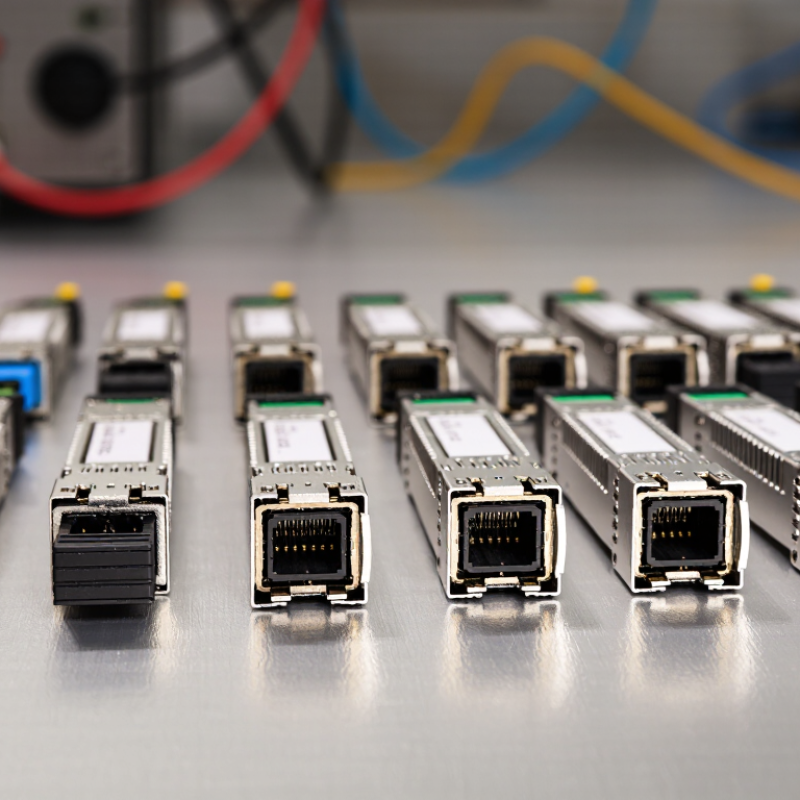
A 25G SFP28 transceiver converts electrical signals from a switch or server into optical signals, then converts incoming light back into data. It fits an SFP28 port and supports a nominal 25-gigabit-per-second Ethernet link. IEEE 802.3by defines 25G Ethernet; common optical options include SR over multimode fiber and LR over single-mode fiber. Typical reach is up to 100 meters on OM4 for SR and 10 kilometers for LR, subject to the module specification. Small, but not simple. SFP28 describes the form factor, not guaranteed reach or compatibility. Host support, fiber type, and link settings must match.
These modules commonly connect server network cards to top-of-rack switches, or switches within leaf-spine data-center networks. They also appear in some 5G transport and fronthaul links. The ITU’s 2024 Facts and Figures report estimated that 5.5 billion people, or 68% of the global population, used the internet. That figure does not measure 25G demand, but it shows the scale of connectivity infrastructure supporting traffic growth. In practice, technicians verify the port’s supported speed, optical wavelength, fiber grade, and diagnostics before deployment. The awkward part: even a short link can fail because of a dirty connector or mismatched settings.
Standardized 25GBASE-SR and 25GBASE-LR links serve different network distances.
25GBASE-SR typically supports up to 100 m over OM4 multimode fiber and is commonly used for short data-center links. 25GBASE-LR supports up to 10 km over single-mode fiber, making it suitable for longer campus and enterprise links. Actual reach depends on the module and fiber specifications.
How Are Chinese 25G SFP28 Manufacturers Evaluated?
Evaluation should begin with standards, not catalog claims. IEEE 802.3by defines 25 Gb/s Ethernet, while SFF-8472 covers digital diagnostics for optical transceivers. Buyers should compare measured transmit power, receiver sensitivity, error performance, and diagnostic readings against each module’s specification. Request test records across operating temperatures, not just a single laboratory result. Check compatibility with the intended switch, fiber type, link distance, and FEC setting. Small differences matter.
Production consistency deserves equal attention. Synergy Research Group reported that the number of operational hyperscale data centers worldwide passed 1,000 in 2024, underscoring the value of dependable, interoperable network components. For a manufacturer, useful evidence includes batch-level inspection records, traceable component sourcing, burn-in procedures, and a clear process for handling field failures. Ask how samples compare with later production lots. A polished sample is not enough. I would also weigh response time and replacement availability, though these are harder to judge from a datasheet. Some evaluations still lean too heavily on price; that shortcut can miss recurring compatibility and service issues.
Evaluation framework for comparing suppliers. The criteria and weights below are suggested and are not a verified ranking or assessment of specific manufacturers.
| Evaluation Dimension | Technical Benchmark or Reference | Evidence to Request | Suggested Weight |
|---|---|---|---|
| Standards Compliance | The module should identify the applicable IEEE 802.3 25 GbE PHY specification and SFP28 interface requirements for its stated application. | Detailed datasheet, standards declarations, and model-specific test reports. | 15% |
| Optical Type and Reach | Common examples include 25GBASE-SR at 850 nm over multimode fiber (up to 70 m on OM3 or 100 m on OM4) and 25GBASE-LR at 1310 nm over single-mode fiber (up to 10 km), subject to compliant cabling and link conditions. | Wavelength, fiber type, maximum reach, connector type, and optical budget stated for the exact model. | 15% |
| Host Interoperability | Compatibility depends on the host port, coding and configuration, firmware, and the module’s electrical and optical interface; it should not be assumed from the SFP28 form factor alone. | A model-specific compatibility list and test results with the customer’s switches, NICs, or routers. | 15% |
| Optical Performance and BER | Transmitter and receiver performance should meet the limits for the declared PHY and operating conditions. Bit error rate (BER) should be tested using an appropriate procedure for that interface. | Test method, test conditions, pass criteria, and traceable results for representative production units. | 10% |
| Digital Diagnostics | Digital optical monitoring (DOM/DDM), when supported by the model and host, can report parameters such as temperature, supply voltage, bias current, and optical power. | Confirm which readings are implemented, their accuracy, alarm thresholds, and host-system visibility. | 8% |
| Operating Temperature | Common module temperature classes include commercial (0°C to 70°C) and industrial (-40°C to 85°C); available ranges vary by product and should be verified in its datasheet. | Rated case-temperature range and test evidence across the specified range. | 8% |
| Power Consumption | Power draw varies by optical type and design. It should be assessed against the module specification and the host equipment’s supported power budget. | Maximum and typical power figures, test conditions, and host-platform validation. | 7% |
| Safety and Material Compliance | Laser products are subject to applicable laser-safety requirements, including IEC 60825-1. Market-specific substance rules, such as the EU RoHS Directive, may also apply. | Current declarations and supporting documents applicable to the exact product and target market. | 7% |
| Production Quality Control | Quality assessment should cover incoming components, assembly controls, calibration, final inspection, and treatment of failed units. | Documented quality procedures, sample inspection records, and corrective-action process. | 6% |
| Traceability | Serial or lot-level records help connect delivered units to production and test records. | Sample labels and an explanation of how serial numbers map to manufacturing and test history. | 4% |
| Delivery and Supply Continuity | Lead times and continuity should be judged against the buyer’s forecast, order size, and replenishment needs rather than a generic industry claim. | Written lead-time commitments, capacity information, and communication procedures for delays. | 3% |
| Warranty and Technical Support | Warranty length, replacement terms, and support response times are supplier-specific commercial commitments, not universal SFP28 specifications. | Written warranty terms, return process, and escalation contacts. | 2% |
| Total Suggested Weight | 100% | ||
Note: Confirm the exact specification, reach, environmental rating, and compliance documents for each part number before purchase. The weights are illustrative evaluation priorities, not measured market data.
China has a broad field of manufacturers offering 25G SFP28 transceivers for data centers, enterprise networks, and telecom links. Their product ranges may include short-reach multimode modules and longer-reach single-mode options. Common specifications include 850 nm or 1310 nm wavelengths, LC connectors, and digital diagnostics. Exact reach and operating-temperature ratings vary, so a product label alone is not enough.
When comparing 25 Chinese suppliers, check more than the headline data rate. Ask for compatibility details, measured power levels, temperature limits, and test reports for the intended switch or router. A sample module should be tested with the actual fiber and equipment before a large order. Small details matter: connector cleanliness, DOM readings, and stable link behavior can affect deployment. Some suppliers provide customization or OEM services, but support and documentation differ. I would not assume that every listed manufacturer has the same production capacity or verification process; that needs direct confirmation. Even a clear specification sheet can leave questions.
Comparing Chinese 25G SFP28 transceiver suppliers takes more than checking headline speed. A module may support 25.78 Gb/s, but host compatibility, optical budget, and operating temperature affect its performance. Review wavelength, reach, connector type, transmit power, receiver sensitivity, and digital diagnostics. Request test records linked to the exact part number. Small differences matter. A polished datasheet alone does not prove consistent output.
Tips: Ask whether samples were tested in your actual switch or router. Confirm the test setup, temperature range, and pass criteria. One successful sample is useful, but it is not enough.
Manufacturing capabilities are best compared through evidence of process control. Look for traceable component records, calibrated test equipment, and inspection data from multiple production batches. Ask how the supplier handles aging tests, fault analysis, and changes to components or firmware. These details can help reveal whether quality holds beyond a prototype run. Also compare realistic lead times and customization options, such as reach or temperature grade. A supplier may offer flexible engineering support, yet still need more time to scale output; verify both claims with sample results and a production schedule.
When comparing 25G SFP28 suppliers in China, start with the exact link requirements. Check the host switch compatibility, fiber type, connector, reach, and operating wavelength. A module for a short data-center link may not suit a longer campus connection. Small details matter. Ask whether the supplier tests each unit for optical output, receiver sensitivity, and temperature performance. Request sample test reports, not just a polished specification sheet. Digital diagnostics can help teams monitor temperature and optical power after installation, but confirm that the readings work with your equipment.
Quality claims need supporting evidence. Look for clear manufacturing controls, serial-number traceability, and a defined process for handling failures. Ask about warranty terms, replacement lead times, and access to technical support across time zones. If your network uses multiple switch models, test samples on the actual hardware before placing a large order. It is tempting to compare only unit prices; that shortcut can hide testing gaps or slow support. I would also question unusually broad compatibility claims. They may be true, but written confirmation and a practical trial provide better assurance. Supplier capacity matters too, especially when repeat orders must match the first batch.
Check IEEE 802.3by for 25 Gb/s Ethernet and SFF-8472 for digital diagnostics. Compare measured values with the module’s specifications.
The article describes a broad supplier field but names no individual companies. Product ranges and verification processes can differ.
Ask for transmit power, receiver sensitivity, error performance, and diagnostic readings. Request records across operating temperatures, not just one lab result.
Request batch inspection records, traceable component sourcing, and burn-in procedures. Compare a sample with later production lots. A polished sample is not enough.
Switches, fiber types, link distances, and FEC settings affect compatibility. Test the module with the actual setup before ordering in bulk.
Inspect connector cleanliness and confirm stable link behavior. Check that DOM readings look reasonable. Small details matter.
No. Options may include 850 nm multimode and 1310 nm single-mode modules. Reach and temperature ratings vary by product.
Ask about response times, replacements, and field-failure handling. These details are harder to judge from a datasheet. I may still overlook something.
This article introduces the 25G SFP28 transceiver, explaining its role in high-speed data transmission and its use in data centers, enterprise networks, and telecommunications infrastructure. It outlines how Chinese manufacturers can be assessed, including product range, technical specifications, compatibility, quality control, production capacity, and customer support. The guide also presents an overview of 25 manufacturers without endorsing any single supplier.
A comparison of product features and manufacturing capabilities helps readers understand how options may differ in performance, reliability, and customization. Buyers are encouraged to define their network requirements, verify interoperability with existing equipment, review testing and warranty policies, and consider delivery timelines and after-sales service. These factors can support a more informed supplier selection and help ensure that a 25G SFP28 transceiver meets the needs of its intended application.
