Deltavox
In the rapidly evolving landscape of telecommunications, the demand for efficient data transmission continues to grow. The 800G optical transceiver has emerged as a leading solution, offering unprecedented speeds and reliability. Industry expert Dr. Ella Chang, an authority in optical communications, emphasizes, "The 800G optical transceiver not only enhances network capacity but also drives innovation across various sectors." This statement reflects the crucial role of these transceivers in modern connectivity.
As we look toward 2026, global buyers face the challenge of selecting the best 800G optical transceiver available. The market is crowded, yet some products stand out due to their performance specifications and compatibility. Companies are pushing technological boundaries, but not all offerings may meet the rigorous demands of industry applications. Buyers must consider not only speed but also quality, durability, and cost-effectiveness.
In an industry where advancements happen continuously, making an informed choice is vital. Buyers should weigh the options carefully. Evaluating real-world performance and industry reviews can help illuminate the best paths forward. The evolving nature of 800G optical transceiver technology invites ongoing reflection and adaptation.
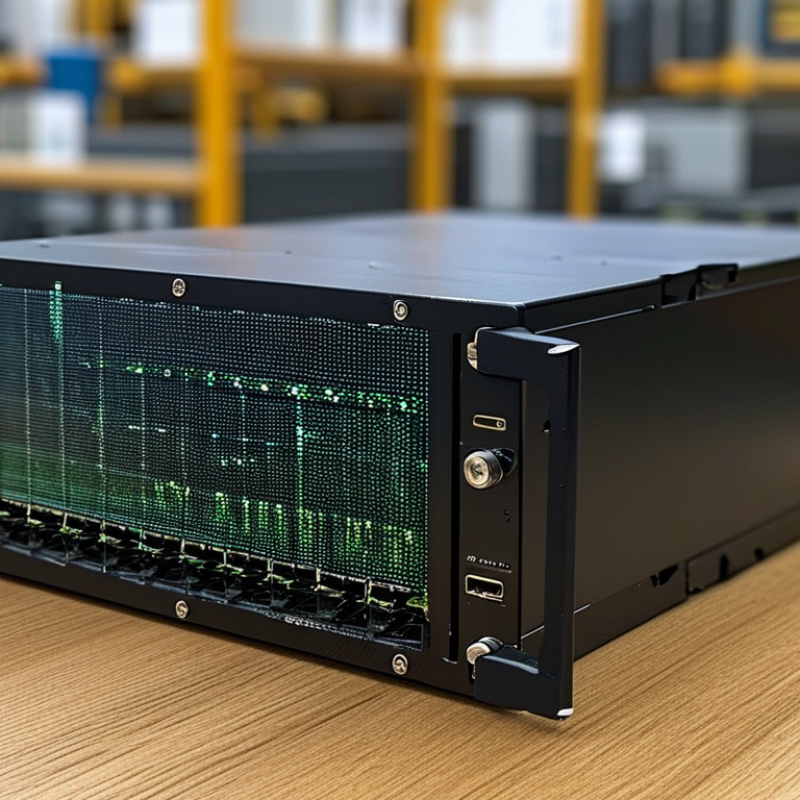
The evolution of 800G optical transceivers marks a significant advancement in data communication technology.
As data demands escalate globally, these devices become critical. They facilitate high-bandwidth applications
in data centers, telecommunications, and cloud storage. The shift to 800G offers users more capacity and
efficiency. However, the integration of such technology isn’t without challenges.
In 2026, buyers must consider various factors when evaluating 800G optical transceivers.
Compatibility with existing infrastructure is crucial. Transitioning to newer technology can be costly and
time-consuming. It's important to ensure that these transceivers can work seamlessly with current systems.
Performance benchmarks are also vital. Users should investigate latency, error rates, and overall throughput
to make informed decisions.
The future of networking is promising, yet there remain questions.
Will manufacturers address interoperability issues? How quickly can the market adapt to this rapid pace of
change? As the industry matures, these uncertainties need thoughtful consideration.
Understanding the landscape of 800G technology is essential for making strategic investments.
Careful assessments will empower buyers to choose wisely as they embark on this new era of optical communication.
As the demand for high-speed data transmission escalates, 800G optical transceivers have emerged at the forefront of technology. These devices are shaped by cutting-edge features like advanced modulation formats, which enhance bandwidth efficiency. The combination of coherent optics and digital signal processing allows for significant data transmission improvements, even over long distances. Such technologies reduce latency, meeting the rigorous demands of modern networks.
Moreover, interoperability remains a critical focus for developers of 800G transceivers. Ensuring compatibility with existing infrastructure is vital for smooth transition and deployment. The commitment to industry standards aids in achieving seamless integration. Evolution in packaging technology also plays a role, as smaller and more efficient designs lead to compact solutions.
However, despite the advancements, challenges lie ahead. The complexity of deploying these high-speed links can overwhelm organizations. The higher power consumption associated with 800G optics raises concerns about sustainability. Addressing these issues is essential for long-term adoption. As technology continues to evolve, ongoing reflection on these developments will be important for future success.
| Model | Data Rate | Wavelength | Distance | Form Factor | Key Technology |
|---|---|---|---|---|---|
| Transceiver A | 800G | 1310 nm | 10 km | QSFP-DD | Coherent Detection |
| Transceiver B | 800G | 850 nm | 100 m | QSFP28 | Multi-mode Fiber |
| Transceiver C | 800G | 1550 nm | 40 km | CFP8 | Dense Wavelength Division Multiplexing (DWDM) |
| Transceiver D | 800G | 1310 nm | 80 km | OSFP | Forward Error Correction (FEC) |
The global market for 800G optical transceivers is rapidly evolving. Major players are focusing on technological advancements and expanding production capacities. A recent report states that the global 800G transceiver market is expected to reach over $10 billion by 2026, driven by the increasing demand for high-speed data transmission.
With the rise of cloud computing and 5G technologies, the need for faster optical transceivers is paramount. However, achieving reliable performance at 800G speeds presents challenges, such as heat management and signal integrity. Companies need to continually innovate to address these issues. The reliance on advanced materials and designs is critical.
When considering 800G optical transceivers, it's essential to think about future scalability. Buyers should prioritize compatibility with existing infrastructure. Additionally, focusing on manufacturers who emphasize rigorous testing and quality assurance can lead to better long-term investments. Knowing the potential pitfalls in technology adoption can guide informed choices.
The rise of 800G optical transceivers is transforming data center operations and telecommunications. These devices deliver high bandwidth, crucial for handling increasing data traffic. According to a recent report by the Optical Fiber Communication Conference, global bandwidth demand is expected to surge by 50% annually. This trend drives the adoption of 800G technology across various sectors.
In cloud computing, 800G transceivers enable faster data transfers between servers. This speed supports artificial intelligence and big data analytics, improving overall efficiency. The finance sector also benefits from reduced latencies, crucial for high-frequency trading. Furthermore, the rapid deployment of 5G networks highlights the need for robust optical solutions.
Tip: When evaluating 800G optical transceivers, consider factors like compatibility with existing infrastructure and potential future upgrades. This foresight can save costs down the line.
Despite the advantages, challenges remain. Cost is a significant factor for many organizations. Transitioning to 800G might require substantial investments in existing systems. Scalability can be a concern too, as demands continue to evolve. Assessing these factors is crucial for effective implementation of this advanced technology.
The landscape of optical transceiver technology is rapidly evolving. As we look towards 2026, 800G optical transceivers are set to play a pivotal role in global connectivity. This advancement is driven by the increasing demand for high-speed data transfer in data centers and telecommunications. Key innovations include enhanced modulation formats and advanced packaging techniques. These developments aim to improve performance and reduce latency, crucial for modern applications.
Despite the promising trends, challenges remain. The complexity of 800G technology can lead to difficulties in integration and compatibility with existing infrastructure. Additionally, the cost of deployment may hinder rapid adoption. Innovations must focus not only on speed but also on energy efficiency and sustainability to address these issues. As industry leaders strive for breakthroughs, learning from earlier implementations will be vital for success.
Overall, the future of 800G optical transceivers hinges on collaboration within the tech community. Continuous feedback loops among engineers and end-users will drive refinement. With thoughtful enhancements, the potential for transformative impact on global communications remains vast.
: They offer high bandwidth, support faster data transfers, and help handle increasing data traffic efficiently.
They enable quicker data transfers between servers, enhancing artificial intelligence and big data analytics performance.
Cost and scalability are key challenges, as transitioning may require significant investments in existing systems.
Compatibility with existing infrastructure and potential future upgrades can save costs in the long run.
They reduce latencies, which is crucial for high-frequency trading and other time-sensitive operations.
Enhanced modulation formats and advanced packaging techniques aim to improve performance and reduce latency.
Future innovations must focus on energy efficiency and sustainability alongside speed advancements.
Feedback between engineers and end-users helps refine the technology for better integration and performance.
Yes, the complexity of 800G technology can create integration difficulties with existing infrastructures.
Continuous feedback loops can drive improvements and lead to more effective implementations in real-world scenarios.
The 2026 landscape for 800G optical transceivers is characterized by significant advancements and a growing market presence. These transceivers deliver high bandwidth and low latency, making them essential for data centers and telecommunications infrastructure. Key features driving their development include advanced modulation formats, improved power efficiency, and enhanced integration technologies.
As global demand for faster data transmission increases, various industries are adopting 800G optical transceivers for applications such as cloud computing, 5G networks, and artificial intelligence. Future trends indicate ongoing innovations in miniaturization and cost reduction, positioning 800G optical transceivers as a cornerstone of next-generation communication systems. The evolution and expansion of this technology promise to enhance connectivity and data handling capabilities worldwide.
